Posts

Why The Future is Investing in Youth

#InvestingInYouthKE Studies have shown that Africa seems to be experiencing something called a demographic bonus which simply means that it seems to have more young people than old people. The predictions also seem to indicate that by 2020 three out of every four Africans will be the age of 20years. This is proof that youth are indeed the future of Africa.  It is for this reason that European Union is seeking partnership with the AU in order to try and secure the future of the youth who are the incoming leaders of Africa. This partnership will seek to inquire what is it that is important to the African youth or what it is that they would like to see changed in terms of Climate change and Environment, Education and Development skills, Peace and Security, Governance, Culture sports and arts, and finally employment or job creation. It is by dissecting these aspects of the day to day life that this partnership hopes to be able to draw a roadmap on how youth can be better represent...
Trump Pulling Out of Climate Finance and What it Means for Kenya

Image
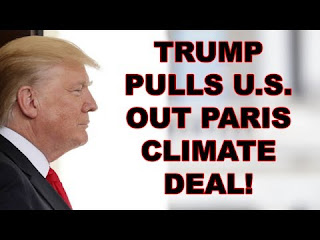
It was not until the last five years that the menace of climate change sunk deep into the brains of Kenyans. It was not until late last year that Kenya started to put into use the climate finance funding that was being distributed by the likes of World Bank and the Organization for Economic Co-operative and Development (OECD). President Trump. Courtesy For a developing country, we would expect a 100% turnout and aggressiveness for the climate finance money but only a shocking 29% of Kenya's institutions claimed that money: taking a large chunk of the percentage was Makueni County.  If we isolate the county from other counties we find great disparity that we may say pushed the county to run for this money. Makueni seems to be a county that has experienced hardship in terms of rainfall availability and as a result they had to adapt to their low levels of rainfall conditions therefore ceasing the once in a lifetime opportunity to better their lives.  Ru...

Africa’s Sustainable Cities – Tree Cover

This Post Was Originally posted on OYGKmag.com For the past four years, I’ve been talking to my peers; trying to convince them that my career path [in Environment], is more than just planting trees. Well, I’ve come to the realization that most of the work I do revolves around trees . There’s no shame to this truth. Increasing forest cover is part of the country’s sustainable development plan and to quote very intelligent scientists: “Trees are the greatest and most efficient innovation  in combating climate change” I cannot emphasize enough the importance of trees in maintaining the stability of our ecosystems. They are catchment areas for rivers, habitats for animals, sources of food and raw materials for our industries such as wood, medicines and most importantly, they absorb carbon from the atmosphere. Away from digression, this article is about how African cities can be sustainable . I am a city dweller. I have lived in Nairobi for the past 20 years, which is 98%...

THE ANGRY GODS

Why didn’t you the gods warn us of these disasters when you were well aware of what awaited us? Disasters that have consumed what remains of the potential offerings to appease you. For a long time, we have lived in our land, fed of its soil and drank of its waters. Life has been so good and comfortable that we never dared ask of where the waters came from. Of course we knew you were the custodians of rain. Even the rainmakers were silent when we turned against the very vegetation we were supposed to nurture, always looking to the skies as they chanted prayers whenever the rare droughts and famine hit the land. The once rare droughts that always presented the wrath of the gods have become so frequent and harsh that we are worried whether the gods are just angry or dead all together. Anger fades upon offerings, or so religious logic dictates. But how many more are we going to offer unwillingly as the livestock get consumed by the land and offered to the gods without any consent. What ...

FROM MDGS TO SDGS, THE GHOST OF FOOD SECURITY AND IT’S THREAT ON NATIONAL SECURITY

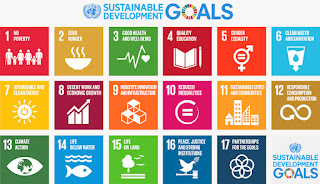
It was the first time we got it right, at least that is what we thought seventeen years ago when the world came up with a road map to Sustainable Development. The Millennium Development Goals (MDGs) were received with mixed reactions depending on your understanding of the process leading to the MDGs or how well you identified with the issues that were to be addressed by the blue print. MDGs were not a dress-rehearsal to another blueprint but the actual play in the theatre whose main objective was to bring the global population above the poverty line. Outlined in eight different goals with specific target, the world was set towards the achievement of economic, social, environmental and political sustainability. If I am to borrow from one of the Sermons by Bishop TD. Jakes, “Nothing Just Happens,” it did not just occur that the eradication of extreme poverty and hunger was identified as the first goal. Though without any knowledge of what informed the drafters, whether the numbers o...

How African Youth Can Strengthen Accountability in Achieving SDGs

Image
originally posted on OYGK magazine As a Project Coordinator at the Environmental Club of the University of Nairobi , we were involved in many activities around campus – projects which were and still are, run entirely by proactive students. An NGO approached our club patron and suggested an ‘Environmental Journalism’ project. Well, the name was ours and we knew that the success of the project would heavily rely on our efforts and so we had to get involved in every phase of developing it. It was a lengthy process – from proposal writing, consultations with the administration, hosting, the day-to-day running of the project, acquiring equipment, looking for partnerships, accounting and monitoring the project. We were the project. We knew what was working, and what wasn’t. We wrote reports and made recommendations so that the project could benefit even more people. Our hands-on involvement made us stakeholders in it and we ensured that we managed it accordingly. This in t...